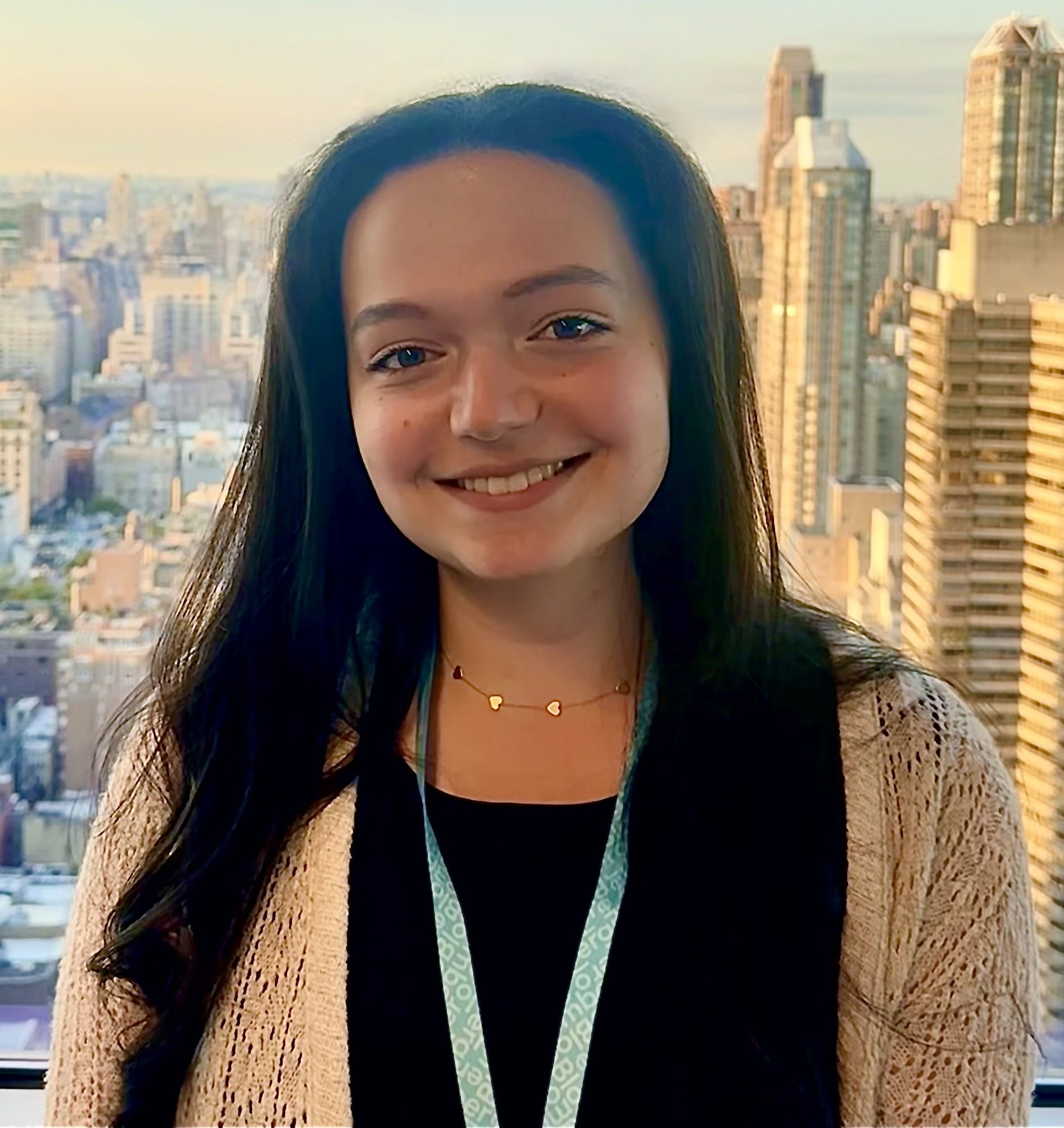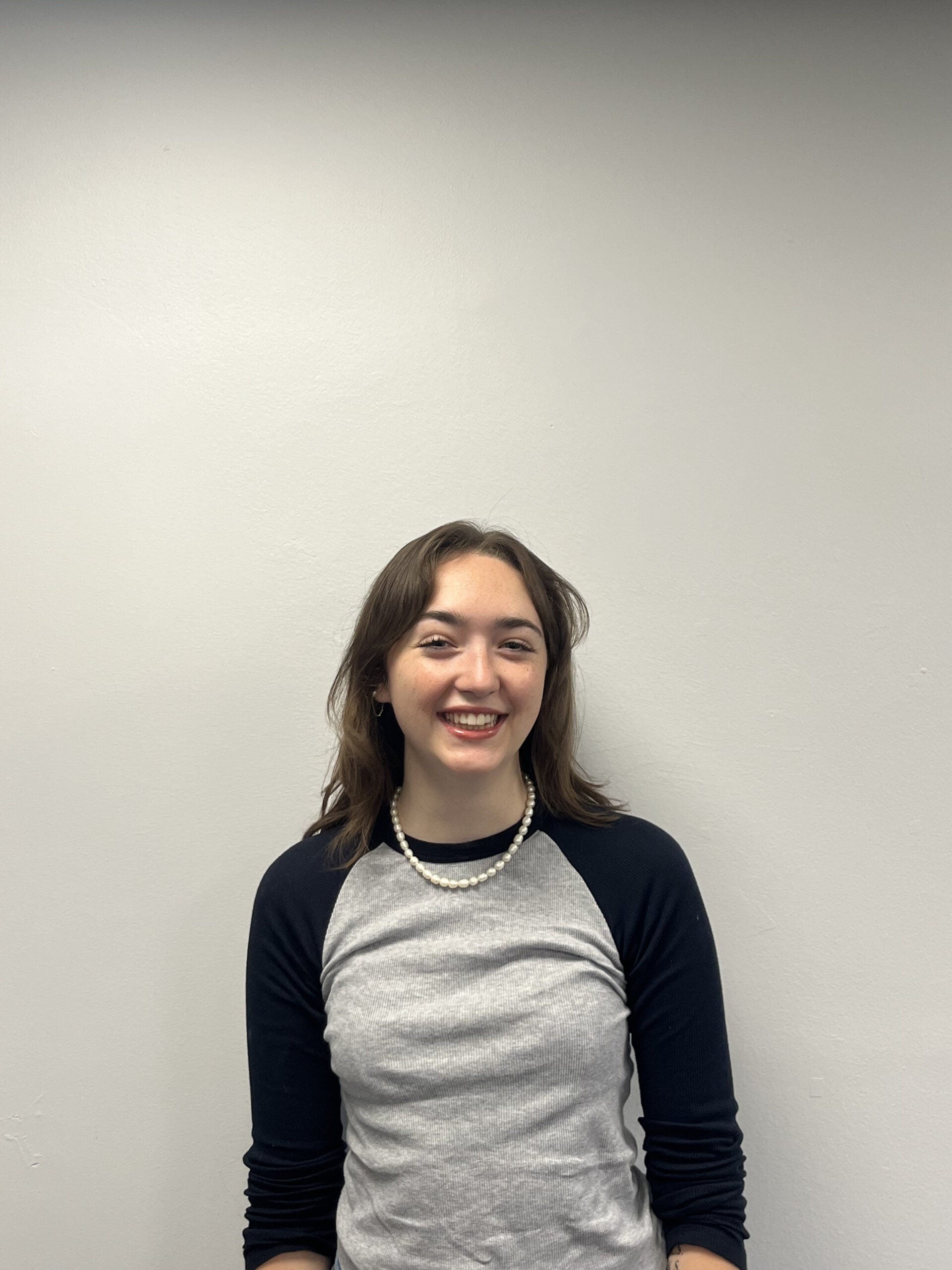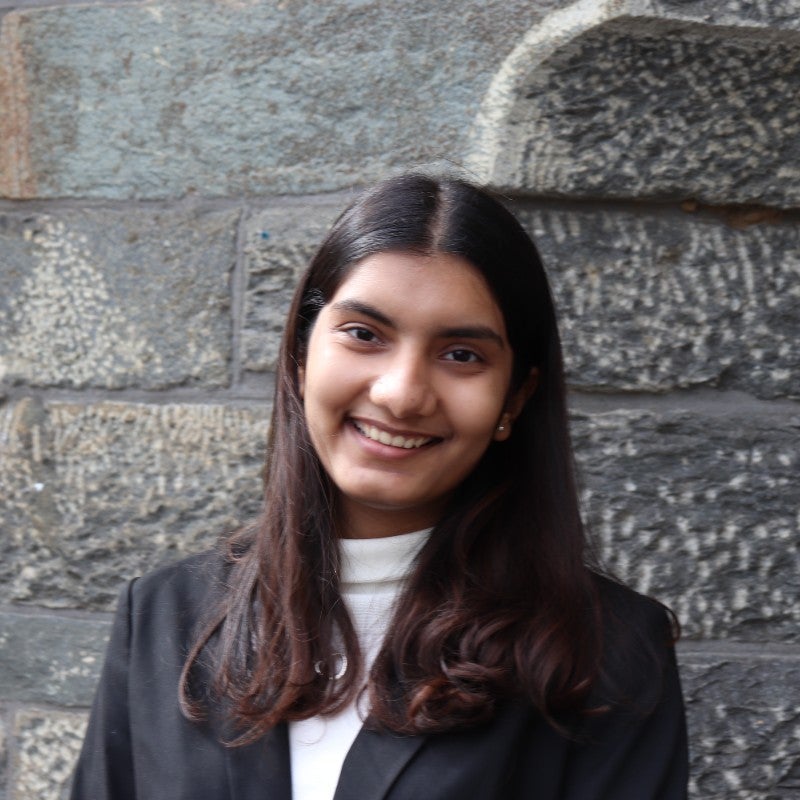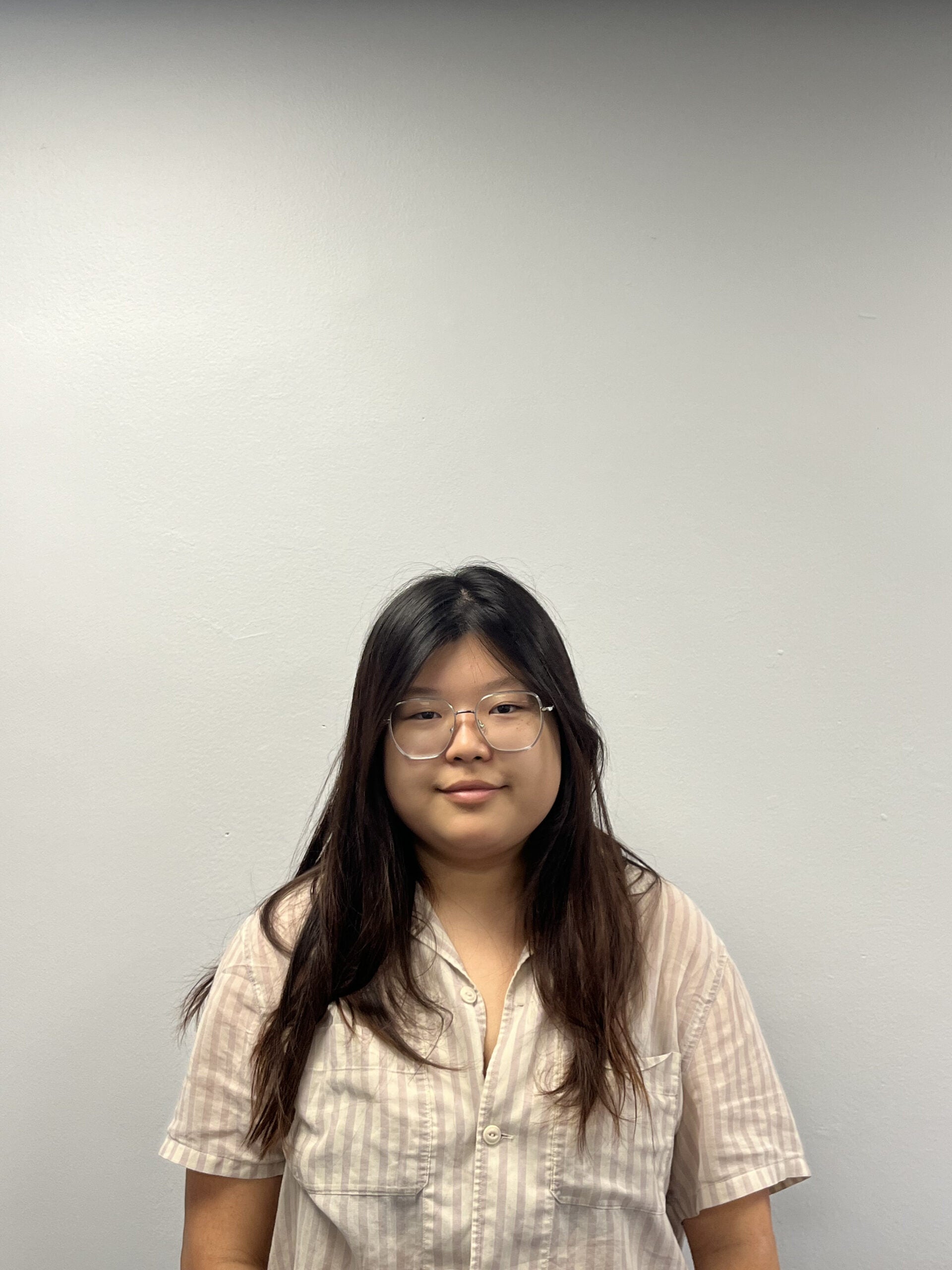
English Honors Students

2025-2026 Cohort

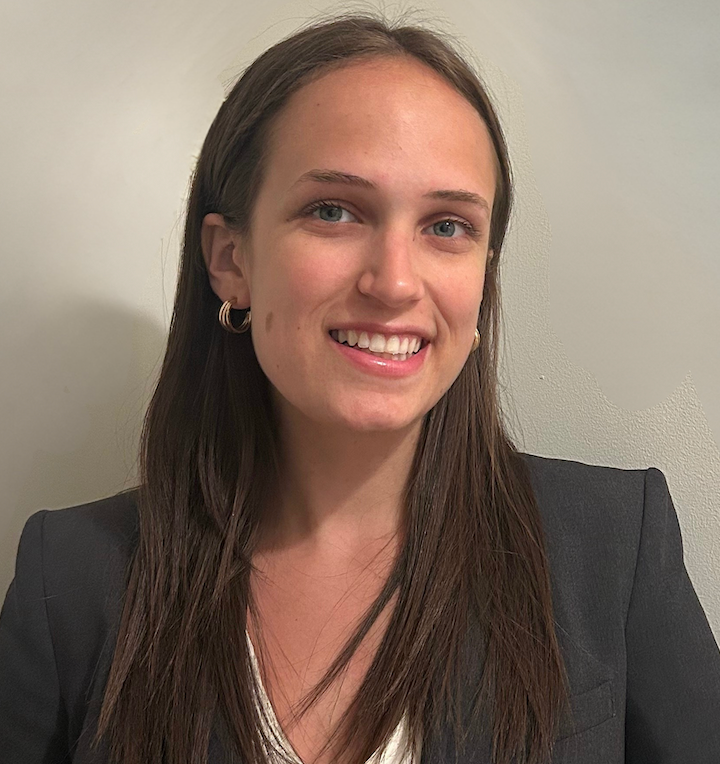
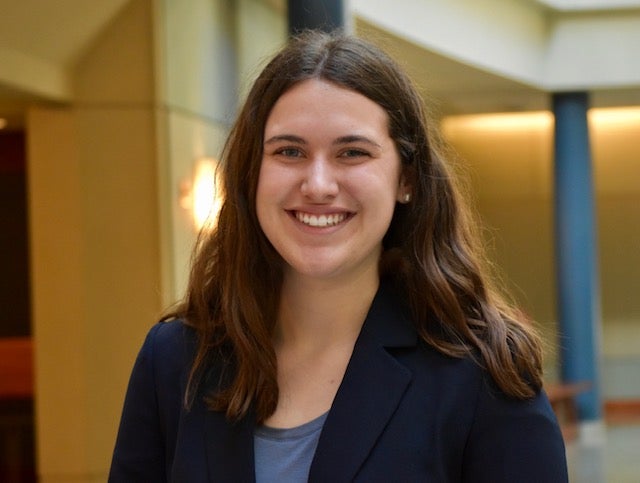
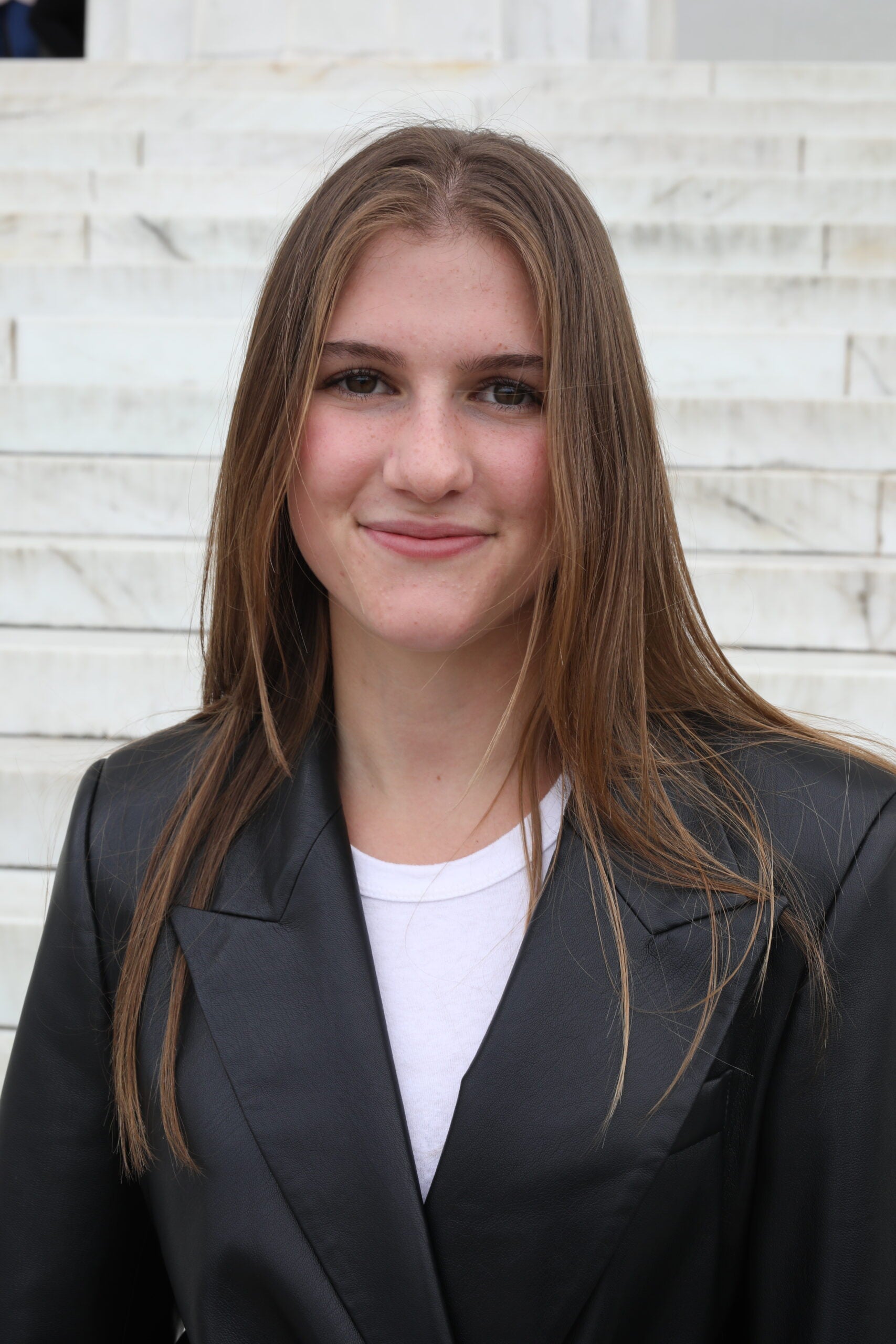
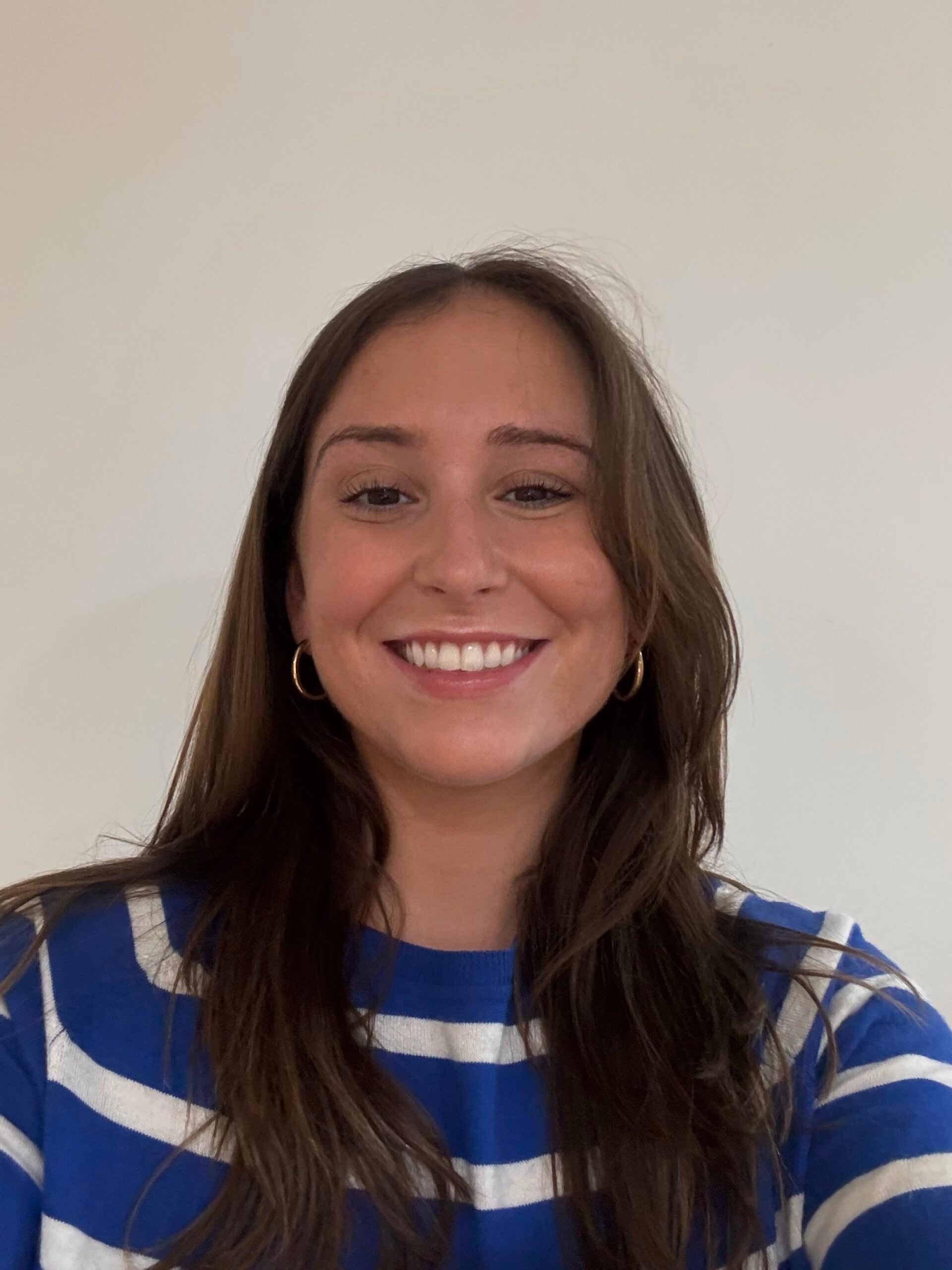
Adelia DeRose

Working Title: Reimagining Beowulf Through the Video Essay
My hybrid thesis project combines Old English literature with contemporary experience through the medium of long-form video. Using Beowulf as the central primary text, I will focus on three major female figures in the poem, Queen Wealhtheow, Hildeburh, and Grendel’s mother, each of whom embodies a distinct role within their warrior society. I plan to analyze how gender shapes their roles and the ways they exert power and influence within a male dominated culture through close readings of these women and their positions within the poem. This analysis, combined with visuals, will serve as the first section of my video.

Once this foundation is established, my project will introduce a contemporary lens by incorporating interviews with college aged students about their own gendered experiences and views on social norms. These perspectives will then be analyzed through the power structure and specific moments in Beowulf. This dialogue between medieval and modern perspectives will highlight the continuities or differences in how gendered status shape social influence and behavior across time.

I am reading a range of secondary scholarship that examines female characters and kingship in Beowulf, along with theories of adaptation. I am also studying the video essay as a form, specifically focusing on the visual media techniques of popular YouTube creators. By setting the social structures of Beowulf in conversation with present realities, I aim to make this canonical yet often seen as antiquated text more relevant and accessible to contemporary audiences.
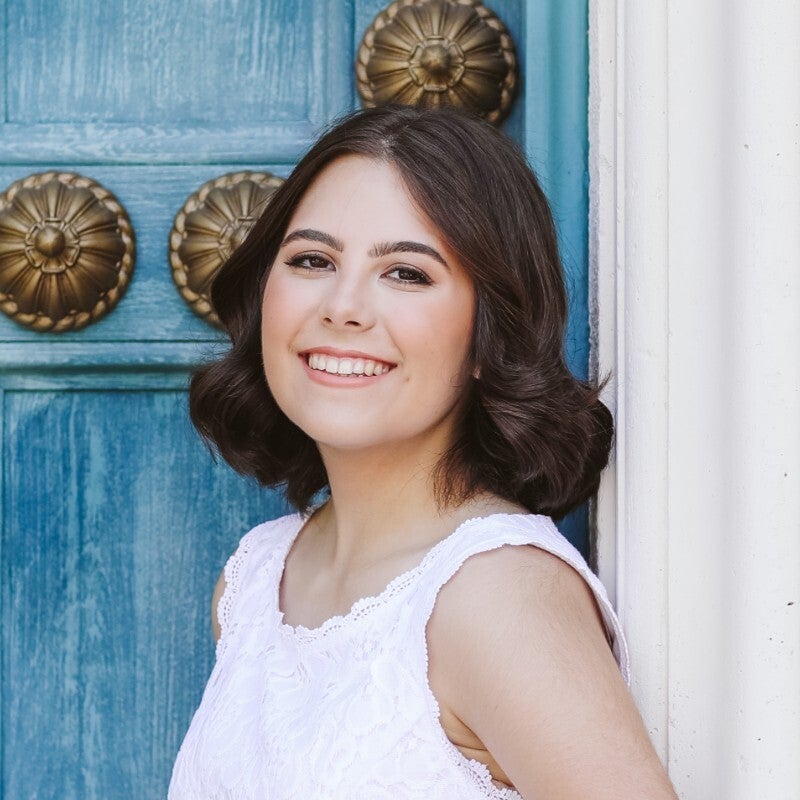
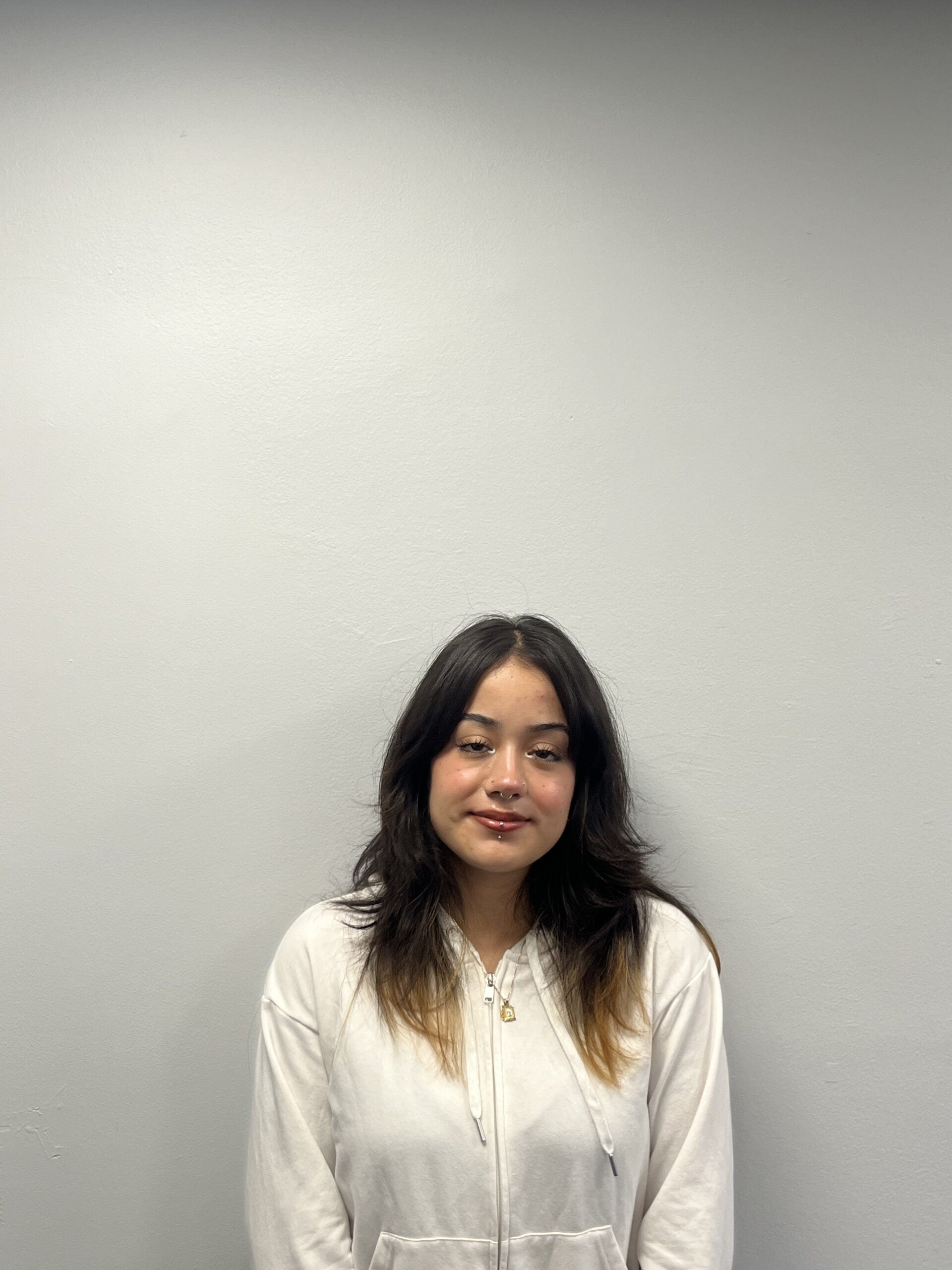
Camille Deschapelles

Working Title: The Grail and the Seeker: Affective Readings of Medieval Grail Texts
My thesis explores the (Holy) Grail not as a fixed religious symbol but as a shape-shifting story space—one that absorbs cultural longing, spiritual desire, and personal meaning across time. Drawing on Affective Medievalism by Prendergast and Trigg, I frame the Grail as an emotionally charged object of interpretation—something readers, writers, and audiences don’t just analyze, but inhabit.

Focusing on three medieval texts—Chrétien de Troyes’s Perceval, Robert de Boron’s Joseph of Arimathea, and Wolfram von Eschenbach’s Parzival—I, as a modern reader, examine through affective close reading how each reshapes the Grail’s emotional meaning even in response to the religious and political contexts of its own time. In addition, this project blends close reading, cultural analysis, and creative inquiry to treat Grail interpretation and process of learning about it as a kind of quest itself.

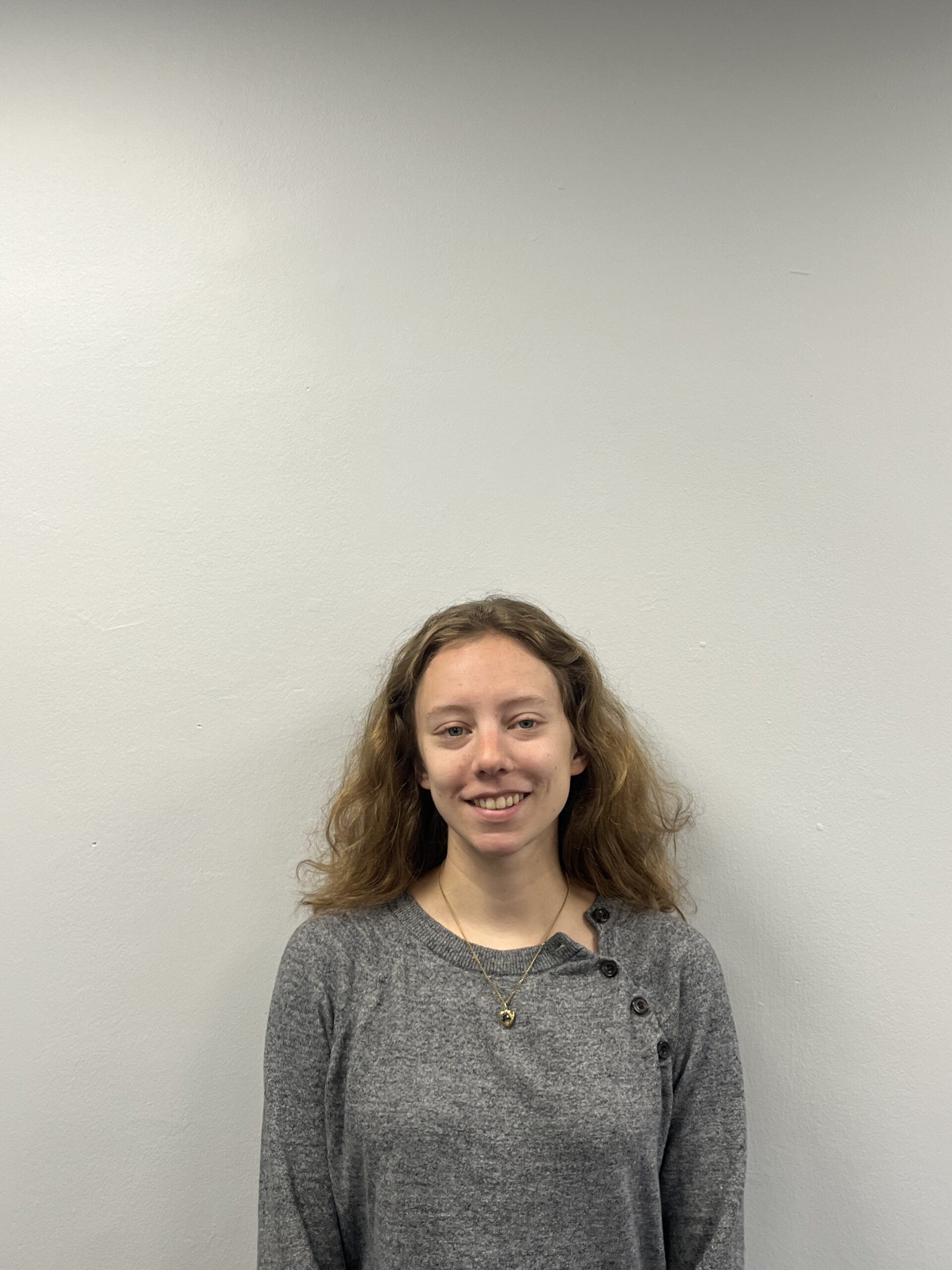
Anna Dewey

Working Title: Metastatic Change: Breast Cancer Narratives and the Medical Industrial Complex

I am so excited to be researching breast cancer narratives this year. This thesis aims to compare and analyze breast cancer narratives of both survivors and previvors. With a main focus on Anne Boyer’s The Undying, this thesis will engage with memoir, and further investigate the social issues these memoirs evoke. What can we learn from breast cancer narratives, as both patients and physicians? Who qualifies as a patient? According to Susan Sontag’s Illness as Metaphor, all people hold a claim in conversations around illness: all people can become ill. Because every individual has a dual citizenship within the well and

the sick, every individual can resonate with the contents of a cancer narrative. Furthermore, the enduring identity of the survivor and the emerging identity of the previvor will be explored.

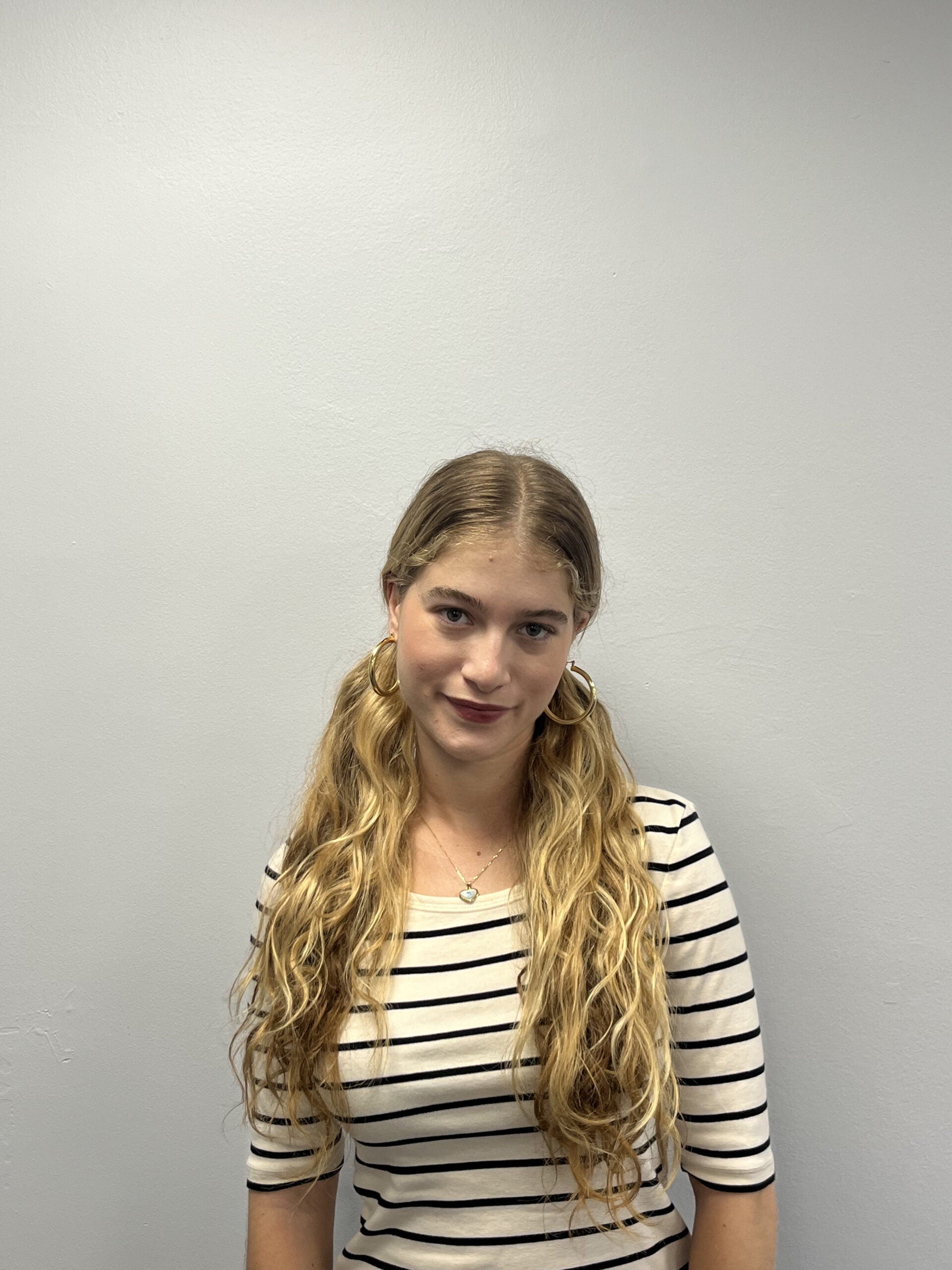
Breanna Lewis

Working Title: Neurodivergent Futures: Autism and the Non-Human Other in Science Fiction

My thesis will critically examine how autism and neurodivergence are represented within the science fiction genre. More specifically, I plan to critique how neurodivergence is used to construct the genre’s idea of the nonhuman. I will also explore how these representations reflect wider cultural anxieties. This thesis will argue that these anxieties often stem from the pathologization of autism in the medical model of disability. I will compare science fiction classics, such as Do Androids Dream of Electric Sheep and I, Robot, with contemporary works by autistic authors like Dora Raymaker and Ada Hoffman. This comparison will examine how autistic authors engage with and resist ableist tropes of apathy and alienation. I will investigate whether an author’s identity shifts how autistic readers consume science fiction. By critiquing these representations, I will argue that science fiction’s use of alienation and othering acts as a site of resistance.
Through my analysis of key works, I plan to move beyond individual identity or diagnosis. Instead, I will consider how science fiction co-opts autistic poetics and language to create defamiliarization in speculative fiction. By aligning these texts with autism, I can examine how these rhetorical strategies work both inside and outside the literary canon. This will form the basis of my critique of pathologizing autistic identities within the medical model. Through this, I plan to assert the need for a social model of disability in science fiction. My analysis will consider how science fiction’s exploration of the real and unreal can reflect the lived experiences of autistic people through disidentification. Ultimately, I will argue that these representations and narratives of difference in science fiction help negotiate the existence of disabled futures, furthering autism advocacy.
Pavlonnis

Isabel Pavlonnis

Working Title: How did the shift from Victorian to Modern literature both reflect and catalyze the founding of modern psychology?

One of the formative aspects of modern psychology is the concept of stream of consciousness, a term which attempts to encapsulate the process by which we think. This concept became heavily integrated into literature, as authors began to try to replicate and depict this process of thought in their writing in order to create realistic, complex presentations of interiority; stream of consciousness as a literary style and technique became a fundamental characteristic of what we understand as Modern literature. The integration of this psychological understanding into literature catalyzed a formative push towards internal exploration, and authors continued to delve deeper into the human psyche through their creative works—literature became not just about reading the story of the characters on the page but instead about experiencing it, about understanding their perspectives, feelings, and internal considerations. As a result, literature began to demonstrate a refined, complex understanding of the mind that in many ways superseded the scope of psychological understanding, depicting themes such as PTSD and memory fragmentation, which were not explored by psychology until decades later. Through my thesis, I intend to study 4 novels that demonstrate the shift between Victorian and Modern literature—Charlotte Brontë’s Jane Eyre, George Eliot’s Middlemarch, James Joyce’s A Portrait of the Young Artist as a Man, and Virginia Woolf’s To the Lighthouse—and analyze their depictions of interiority using a range of both critical and scientific texts.

Natalie Price-Fudge

Working Title: A hybrid memoir in lyric essays exploring the in-between spaces of privilege, imposture, and navigating elitism.

My thesis will be a hybrid memoir that follows the form of a lyrical essay, combining aspects of prose and poetry to outline unspoken social truths. Much of my research is dedicated to experimental writers, think Claudia Rankine, Viet Thanh Nguyen, and Maggie Nelson. I will be focusing on themes of growing up on the edge of privilege, class mobility, and dual identity.As a white woman attending elite institutions, I find myself able to mold myself into the expectations and stereotypes of the elite that surround me, even though I was raised in a sphere so different from my current one.
I am in the in-between.

There are also many contemporary examples of class mobility in connection to the horror genre, specifically in films like Saltburn and Parasite. There is an idea that is permeating mainstream culture that I think is very important to address in my thesis: why is class mobility seen as such a visceral threat, something monstrous? I hope to write from the perspective of the monster.
Most of all, I want my thesis to contribute to existing conversations around the lyrical essay as a form of political resistance and critique of the world order, specifically by examining what it means to navigate and succeed within a system that inherently consolidates wealth and power among the elite.

Liliana Priestaf

Working Title: Don’t Smut Shame Me: Form, Power, and Agency in Seductive Fiction

From the amatory fictions of the late seventeenth century to the romantasy novels of the early twenty-first, there exists a long history of sensual tales of sexual intrigue written by and for women that have been the most widely read texts of their respective days. Yet just as the former was virtually invisible in traditional accounts of literary history before restorative feminist efforts, so too has the latter been initially regarded as a frivolous addition to the lighthearted lineage of romance fiction. My project aims to interrogate this analogous erasure, understanding that the parallels between these fictional phenomena do not end at their receptions but, rather, indicate the beginnings of a greater struggle between sex and power and their literary representations. I work from the assertions that power is inherent to sex; that the earliest romances could be about power or about sex but not about both; that criticism has struggled to imagine these elements as a cohesive whole; and finally, that romantasy invites us to ask whether it has carved a space for sex and power to integrally and meaningfully coexist—and whether this opens new possibilities for female autonomy in literature.

Savannah Sarafoglu

Working Title: Speculative Fiction as a Tool for Prison Reform

In my thesis, I plan to explore how speculative fiction can be utilized to imagine and induce prison reform. Based on my research and analysis of speculative fiction texts such as Chain-Gang All-Stars by Nana Kwame Adjei-Brenyah. I will discuss what makes good speculative fiction and write my own speculative fiction that explores imaginations of futures with prison reform that are grounded in the past and present.

Natalie Shaw

Working Title: Fragmentation and Muteness: A Choose Your Own Exploration of Collage as a Philosophy

My research starts from a simple problem: language, especially linear prose, struggles to translate complex and abstract concepts; the self, consciousness, grief, and the mystical. I study how collage (fragment, gap, intertext, and material form) and creative redescription can better grasp and portray these concepts. By embracing simultaneity through nonlinear and hybrid text objects, readers participate in meaning-making. Core readings include Anne Carson’s works; Nox, Decreation, Antigonick, and If Not, Winter—Fragments of Sappho in dialogue with Borges’s “The Aleph” and “The Circular Ruins.” Through theoretical lenses of Richard Rorty (contingency/redescription), Steven Katz (experience vs interpretation), W. T. Stace (atemporal, egoless states), and Stanley Tambiah (ritual/performative language), I evaluate the role of language in conveying and interpreting experience. I also look at how intertextuality invites collaboration into a form of collective consiousness, using examples from Carson and Aldous Huxley.

My central argument is that collage isn’t just a style; it’s a philosophy of knowing. When language is collaged—fragmented, gapped, woven intertextually, and set in image-text space—it can stage simultaneity, invite reader participation, and perform meaning (sometimes even changing reality) through creative description and analogy.

The final thesis is a choose-your-own artifact with a convergent end. Different paths cover the same conceptual nodes; limits of language, collage’s capacities, nonverbal meaning, ritual performativity, and layered time—so readers don’t just read the claim- they experience it.

Alexis Tamm

Working Title: The Marketable Memoir: Understanding the Modern Memoir Boom

My thesis will argue that memoir has been an ever-present and constantly evolving genre that has increased in popularity since the “memoir boom” started in the 1990s, mainly due to notable economic and cultural shifts. These forces—which include the consolidation of the publishing industry, new ways of understanding genre, changing discourse around trauma, and even the organization of bookstores—have strongly impacted the popular memoir in its modern form. I will trace this evolution through three bestselling memoirs of childhood trauma published during this period: Mary Karr’s The Liars’ Club (1995), Jeannette Walls’s The Glass Castle (2005), and Tara Westover’s Educated: A Memoir (2018), using these works to demonstrate how the genre has continued to evolve even within the memoir boom and explain its increasing appeal to its contemporary audience.

Patricia Thompson

Working Title: Autofictive Novella

I am crafting a coming-of-age tale based on fictionalized personal experiences exploring themes of mental health, sexuality, and tumultuous relationships.

Karenna Warden

Working Title: Holding


I am writing on intimate partner relationships, learning to define love, and personal growth. I plan to explore how and why my characters’ definition of love is tied to pain, enmeshment, and grief. I will write prose poetically, utilizing time jumps, fragmentation, and indirect discourse. I am inspired by various works of Toni Morrison, including Beloved, Jazz, and Song of Solomon. I will take from her use of lyrical prose and her blurring of memory, reality, and haunting. I am also inspired by the writing of Elena Ferrante, Audre Lorde, Carmen Maria Machado, and Barbara Kingsolver in their writing on character’s experiences navigating relationships and their focus on the psychological and moral growth that accompanies this effort.

2024-2025 Cohort

Daniella Arevalo

Working Title: “It is a part of the terrible story:” Memory, language, and authority in Dracula and Carmilla

Daniella plans to study how the concepts of memory, language, and authority interact and take shape in two epistolary Irish Gothic texts, Dracula and Carmilla. She will look at how the epistolary genre, portrayal of linguistic diversity, and focus on story-telling and record-keeping compare across the two texts.

Evelyn Blanchette

Working Title: An English Walnut

Evelyn plans to produce a collection of speculative fiction short stories. Her work is inspired by contemporary authors of the genre such as Ling Ma, George Saunders, and Johns Linnell and Flansburgh.

Leila Bloomingdale

Working Title: “Bare Life and Grievability: The politicization of mourning in 20th century Palestinian poetry”

Leila plans to use the framework of the politicization of public grief and mourning in order to examine theoretical concepts of Bare Life, the State of Exception, and the age of biopolitics. She will further explore these concepts through a study of their reflections in 20th century Palestinian poetry, with special attention to the work of Taha Muhammad Ali.

Elyza Bruce

Working Title: “Ecotourism in the Scottish Highlands and the Legacy of the British Romantics”

Elyza will be studying Romantic-era poetry and travel writing created during “Tours of Scotland” in the early 19th century. She will investigate what these texts can tell us about the history of the Scottish Highlands as a landscape, its conservation, and the current cultural phenomenon of ecotourism in the region.

Zoe Bushman

Working Title: “Writing Woman?hood: Interrogating and Interrupting Gender in Monique Wittig’s Les Guérillères and Radclyffe Hall’s The Well of Loneliness

Zoe plans to study Radclyffe Hall and Monique Wittig’s fictional works. She is interested in how they conceptualize/problematize the category “woman” when writing queer subjects in their novels, and how these serve as entry points to analyzing gender construction.

Alexis Nguyen

Working Title: “The Pursuit of Justice in Asian-American Detective Fiction”

The genre of hard-boiled detective fiction incorporates entertaining elements of a who-dunnit with fascinating and impactful social commentary. Alexis seeks to investigate one aspect of this—the idea of justice and how it differs or stays the same between traditional American hard-boiled detective fiction and Asian-American detective fiction. She also hopes to illuminate how justice intersects with concepts of race, gender, and other factors within this field of literature.

Olivia Noreke

Working Title: “Haute Couture or For the Girls: A Comparative Analysis of Highbrow Culture and Popular Culture in 21st Century Women’s Literature”

Olivia plans to study the differences in highbrow literature and novels considered popular culture, in addition to how the works are received. To analyze this, she will develop comparative textual analyses of recent novels ranging from It Ends with Us by Colleen Hoover to Swing Time by Zadie Smith and research book reviews, social media posts, awards won, and online commentary about the novels to identify how books are categorized in terms of popular culture and highbrow culture and how their categorization effects how readers approach them.

Jillian Proshan

Working Title: “Prince of Heartachers”: Challenging the Reputations of Poets Edwin Arlington Robinson and Robert Frost

Jillian’s thesis examines the work of the rival poets Edwin Arlington Robinson and Robert Frost. Frost bestowed the moniker “prince of heartachers” upon Robinson, contributing to Robinson’s reputation as a melancholy, now largely forgotten, poet. Jillian will explore darkness and pessimism in the poetry of both Robinson and Frost to challenge the superficiality of Robinson’s legacy, demonstrating the profound influence of reputation on the literary canon.

Amelia Shotwell

Working Title: “Thick With Child-Bearing:” Ideal Motherhood in Steinbeck’s The Grapes of Wrath and Faulkner’s As I Lay Dying

Amelia plans to study the concept of “Ideal Motherhood” as it presents itself in Great Depression literature. She will compare Ma Joad and Rose of Sharon in John Steinbeck’s The Grapes of Wrath to Addie and Dewey Dell Bundren in William Faulkner’s As I Lay Dying. In addition to her critical analysis, she plans to write a short historical fiction that dismantles the binaries of Depression-era female representation.

Khushi Vora

Working Title: “The Emergence of the Post-colonial Middle Class in India and Ireland as seen in Dubliners and Malgudi Days

Khushi is researching the impact of colonialism on the emerging middle class in Ireland and India by examining literature published during the rise of independence movements in those countries. In particular, she is examining the impact through the lenses of various literary and cultural movements, such as modernism, orientalism, post-colonial studies, feminism and developmentalism.

Alex Wang

Working Title: “Track Your Cycle: Mothers, Daughters, and The Body”
Alex is working on a collection of experimental essays on generational trauma through the lens of mother-daughter relationships, chronic illness, the body, grief, and gender & sexuality.

Hailey Wharram

Working Title: “Musings”

Hailey is writing a creative thesis in the magical realist genre about a famous singer-songwriter with a peculiar secret. Within her project, she hopes to explore the ethics of inspiration and the frequently misunderstood contours of feminine creativity.

Mai Wheeler

Working Title: “Bitches, Blogs, and Bloodsuckers: The Twilight Saga as a Feminine Respite in the Postfeminist Era”

Mai plans to investigate the manner in which celebrity journalism and postfeminist ideals created the perfect environment for The Twilight Saga to succeed. She will examine Britney Spears and Anna Nicole Smith’s public images, as well as incorporate early aughts Twilight fan blogs and gossip sites.

2023-2024 Cohort

Armoni Armour

Armoni Armour

Working Title: “Call Us What We Carry: An Introspective Look at the Objects of Grief and Mourning the Intangible”

Armoni plans to explore how contemporary Black poets like Amanda Gorman poeticize testimonies of mourning and grief as a way to resist abstract forms of violence and reassert the humanity of their respective communities. She will incorporate her own creative prose related to grief and mourning alongside critical analysis in her hybrid project.

David Edwards in a grey jacket, red tie, and hornframe glasses.

David Edwards

Working Title: “The Photographic Death Drive in White Noise”

David is studying the presence of photography and television in Don DeLillo’s novel, White Noise. In particular, he is interested in the way these visual mediums are distinguished not only from the literary form of the novel, but from each other as well. In the distinction between the two, David hopes to explore how photography and television serve differing roles in postmodernity, especially with respect to consumption and death.

Kathleen Felli

Kathleen Felli

Working Title: “Legacy: Jay-Z and the Black Capitalist Narrative”

Kathleen is writing a critical thesis that will focus on Jay-Z’s music and his portrayal of himself as an aspirational figure through a Black capitalist narrative. Her thesis aims to be intersectional, incorporating themes of masculinity and race to contextualize her analysis of the Black capitalist narrative.

Abby Gardner

Working Title: “Working Title”

Abby’s thesis takes a hybrid creative-critical approach to examine the ways in which love navigates the boundaries of entrapment and liberation through a literary lens. She will utilize narrative form and poetry interspersed with anecdotal criticism, drawing from writers like Roland Barthes, to explore love’s confinement and violation of these boundaries.

Chloe Holman

Chloë Holman

Working Title: “Radical Gestures: Black Feminine Resilience and Determination in Toni Morrison’s Fiction”

Chloë’s current thesis project explores the many ways that Toni Morrison creates space in which attentive readers can observe and trace another one of the most transformative themes in her fiction—the radical ethic of Black women’s self-determination in the midst of the virulent attack on Black life and Black love. Through The Bluest Eye, Sula, Song of Solomon, Beloved, Paradise, and A Mercy, Chloë will critically analyze how Morrison presents Black feminine radical self-determination to propose a model of resistance to historical and systemic racial and gendered inequities that continue to limit life chances and opportunities for Black women and those they love.

Kevin Moreno

Kevin Moreno

Working Title: “I LOVE TO HATE YOU”

In his creative thesis, Kevin plans to create a multi-media anthology consisting of prose, poetry and photography. This anthology intimately engages with the themes and imagery of Romanticism but through a queer lens and works to understand how the natural entangles itself with stories of love and hate.

Grace Rivers

Grace Rivers

Working Title: “Sylvia Plath: Voyeurism, Madness, and the Spectacle of Death”

Grace plans to study the sensationalization of death and female mental illness in Sylvia Plath’s The Bell Jar. Subsequently, she will explore the voyeuristic cultural fascination with Plath’s suicide and the sensationalized media which surrounds her legacy.

Leila Sebastian

Leila Sebastian

Working Title: “Missing Mothers: The Link Between Loss and Motherhood in Toni Morrison’s Beloved and Elena Ferrante’s The Lost Daughter”

Leila is going to be researching the relationship between loss and motherhood in Toni Morrison’s Beloved and Elena Ferrante’s The Lost Daughter. She plans to explore how the mothers in these texts experience a loss of their individuality as a result of their motherhood and simultaneously choose to make themselves lost to their children in order to reclaim this individuality. She wants to participate in a collective reimagining of motherhood as an institution through her engagement with these two novels.

Michelle Vassilev

Michelle Vassilev

Working Title: “Bound: Raising a Family in Communist Bulgaria”

Michelle is working on a creative project about her family’s experience living in Bulgaria during its communist years. She will conduct historical research on the time period, lead multiple in-depth interviews with family members, and examine the interplay of friendship and surveillance in communist Bulgaria. Ultimately, she plans to produce a creative-non-fiction work that combines personal family anecdotes with the political climate of the time.

Sophie Venter

Sophie Venter

Working Title: “Why do you like Miss Austen so very much?: Brontë, Austen, and 19th-century female friendships”

This thesis will focus on Jane Eyre and Emma, specifically investigating the female friendships of both protagonists. Jane and Emma’s friendships will be studied as a mechanism for coming-of-age in both novels, through the lens of psychological security.

Josephine Wu underneath the pink/white flowers of the tidal basin cherry blossoms.

Josephine Wu

Working Title: “Toothless”

Josephine will study how the maternal body serves as a method of storytelling to negotiate the trauma of migration. Through a collection of short stories in the prose poetry form, she will infuse surrealist elements to portray the Chinese American experience of intergenerational trauma.

Cynthia Yu

Cynthia Yu

Working Title: “Leaving the Loom: Penelope and the Modern Heroine”

Cynthia intends to explore the characterization of Penelope in 21st-century feminist readaptations of Homer’s Odyssey. Her thesis project examines how reassessments of gender and power in the Homeric epic have led to the transformation of Penelope into the modern heroine. She will be incorporating depictions of Penelope from several genres in her research, including prose novels, graphic novels, poetry, and video games.

2022-2023 Cohort

Esohe Asuen

Esohe Asuen

Working Title: “Feminine Intersectionality in 18th and 19th Century Literature”

In my project, I’ll be exploring 18th and 19th-century constructions of femininity and how they interact with other identities like race and class. I hope to look at how feminine expression is aided or inhibited by other identities and explore how subjects contend with the realities created by the intersection of identities. I’ll be looking at two principal works: Maria by Mary Wollstonecraft and The History of Mary Prince by Mary Prince.  

Headshot of Lucas Balon

Lucas Balon

Working Title: “Partisan Review and the CIA: Compromised Criticism in the Cold War Era”

I am writing a critical thesis that centers on the following question: To what extent did the CIA’s funding of the Partisan Review alter the subject matter of the journal’s writing and intellectual freedom?

Headshot of Caitlin Baskin.

Caitlin Baskin

Working Title: “Requiem for a Nightmare: Aesthetics of Addiction in Film and Television”

The critical portion of this thesis will focus on how drug addiction and substance abuse have figured onscreen amidst the American drug war and opioid epidemic, exploring how visual media is particularly suited to humanizing (or, conversely, to dehumanizing) the struggle of drug addicts. The creative portion (which is, by far, the smaller of the two) will weave together the chapters of creative analysis with poetry exploring my personal connection to the topic.

Sarah Conner

Sarah Conner

Working Title: “The Delusion of Daughterhood: Love, Guilt & Reparation

My honors project is a creative nonfiction portfolio of three essays drawing from themes in Madeline Klein’s writings on the psychology of mother and child. Using personal anecdotes, literature and pop culture, my portfolio explores facets of identity including daughterhood, motherhood and the construction of a home.

Headshot of Elizabeth Fortunato

Elizabeth Fortunato

Working Title: “Double Down

My creative thesis, currently titled Double Down, is an epistolary, medical mystery novella focusing on toxicology, and investigates of the trope of the doctor-as-detective– specifically, with the doctor leaning into the role of an amateur detective. Much of the process of figuring out a diagnosis or determining a plan of treatment already involves experimentation and detective work, which allows a physician to fall into that unique dual role. As the novella is told in an epistolary style, it will be composed in a variety of formats to provide the evidence and tell the story, including medical documents, emails, text messages, and audio transcripts. My inspiration has come from a lot of ergodic literature, and I hope to include the trademark elements of that genre, too, in my work, to create a unique story. 

Baker Fox

Baker Fox

Working Title: “A.E. Housman: A Master of Language and Emotional Deflection”

My critical thesis, on A. E. Housman’s poetry, explores the following question: How does Housman use form, setting, manipulation of meter, and a variety of other poetic techniques to express himself in a world that was hostile towards aspects of his personality?

Headshot of Kirsten Garino.

Kirsten Garino

Working Title: “Haunted Daughters: Storytelling, Generational Trauma, and the Female Gothic”

My thesis considers familial relationships, and especially mother-daughter pairs, in Emily Brontë’s Wuthering Heights and Toni Morrison’s Beloved. Looking at storytelling and the freedom to narrate in combination with Gothic tropes like the double, I explore how these texts create identity and discuss intergenerational trauma.

Headshot of Audrey Hall

Audrey Hall

Working Title: “It Made Sense at One Point”

How does a Native American woman “Come home” when physically imprisoned?

Headshot of Zoe Hubbard

Zoe Hubbard

Working Title: “Celie: Author, Standardizer, and Linguistic Power”

My thesis explores how The Color Purple is rooted in Blackness as the standard frame of existence – in a subversion of literary norms, whiteness is peripheral and is subject to the scrutiny of a Black gaze. For example, the narrator and main character, Celie, writes in African American English (AAE), the standard language of the novel. When she must relay the speech of white characters, she standardizes and “corrects” it by converting it into AAE.

Headshot of Brian McCrann

Brian McCrann

Working Title: “Calm Between Storms

In my prose-poetry project, I hope to address issues of past, present, and future through threading my own personal experiences on Cape Cod, Massachusetts with a portrait of the Cape as an environmentally unique place.  I hope to explore the Cape as it represents a convergence of rich history, change over time, and the impacts of climate change into the future. I ultimately hope that the project is both resonant and reflective of the personal and interpersonal effects of the dramatic environmental changes we are facing.

Headshot of Jimmy O'Meara.

Jimmy O’Meara

Working Title: “The American Artist

My fiction thesis (novella) explores the gradual dissolution of a relationship over the course of a month.

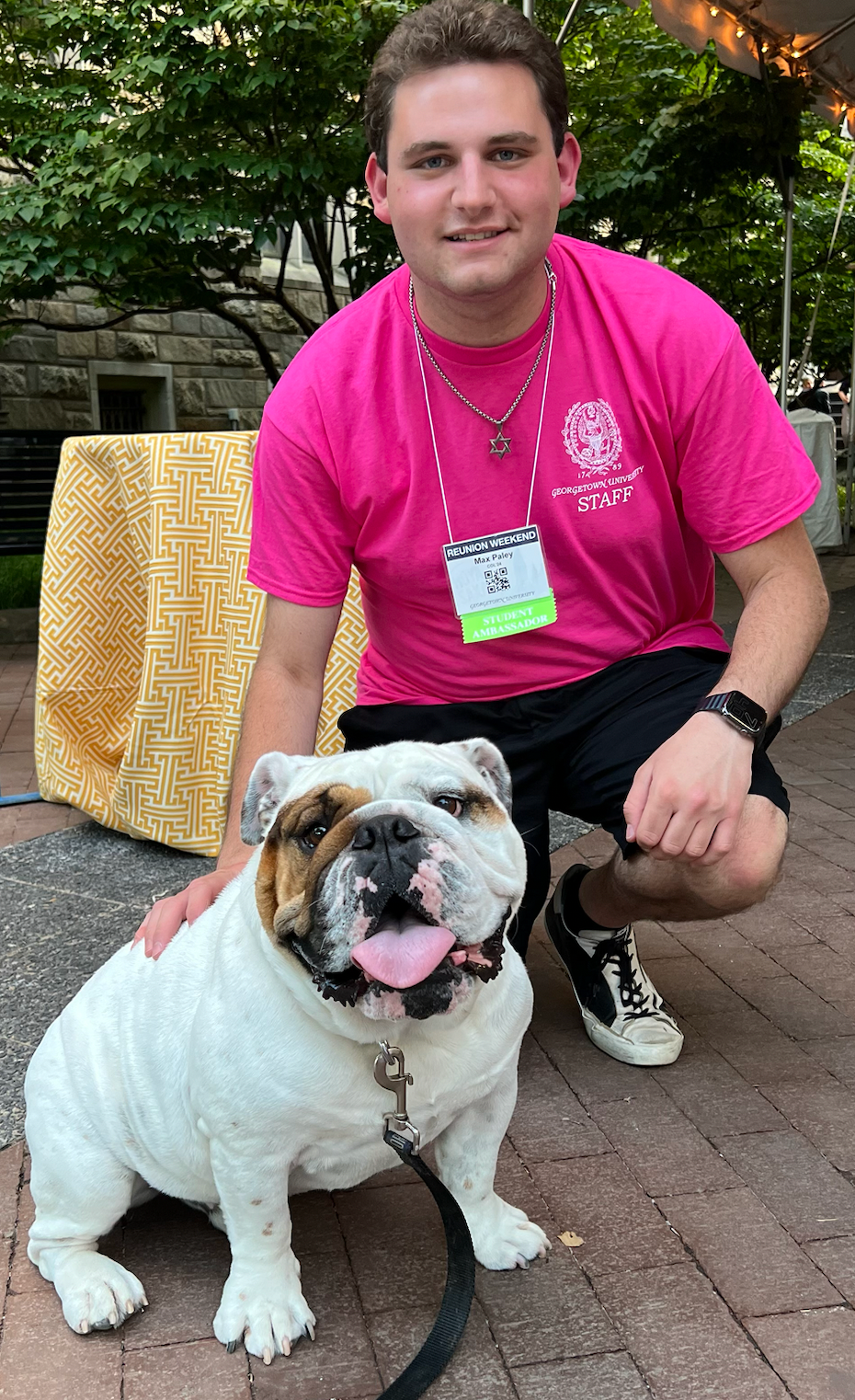
Headshot of Max Paley with Jack the Bulldog

Max Paley

Working Title: “True Crime Podcasts: Origin, Form, and Features”

My thesis aims to provide a framework and models for one of the most popular media texts in contemporary culture: true crime podcasts. By tracing the origin of podcasts from 2004, to the release of the groundbreaking Serial podcast in 2014 (which launched the true-crime podcast genre), and then shifting to an examination and analysis of the genre up to 2023, my thesis looks to add to the relatively limited scholarship on podcasts.

Headshot of Maeve Silk

Maeve Silk

Working Title: “Interiors and Architecture in 18th Century British Gothic Fiction: Catalysts for Character Interactions and Indicators of Change”

My thesis examines interior objects and architecture in 18th and 19th-century Gothic fiction, specifically focusing on the considerable role that these elements play in character development throughout The Mysteries of Udolpho, A Sicilian Romance, and The Castle of Otranto, as well as considering the historical significance of incorporating this Gothic decoration in fiction.

Headshot of Avery Van Natta

Avery Van Natta

Working Title: “Reading an Epidemic: Exploring the Cultural Construction of AIDS/HIV Through Literature”

I intend to use a variety of literary and mixed-media sources, including works of fiction, memoir, and visual art, to consider the role of these texts in the socio-cultural understanding and remembrance of the AIDS/HIV epidemic and those impacted by it. My project will focus particularly on the urban gay male community in California, and will explore themes of silencing, community building, literature as historical record, among others. Additionally, I will examine and deconstruct AIDS discourse and consider the formal construction of the sources I work with.